
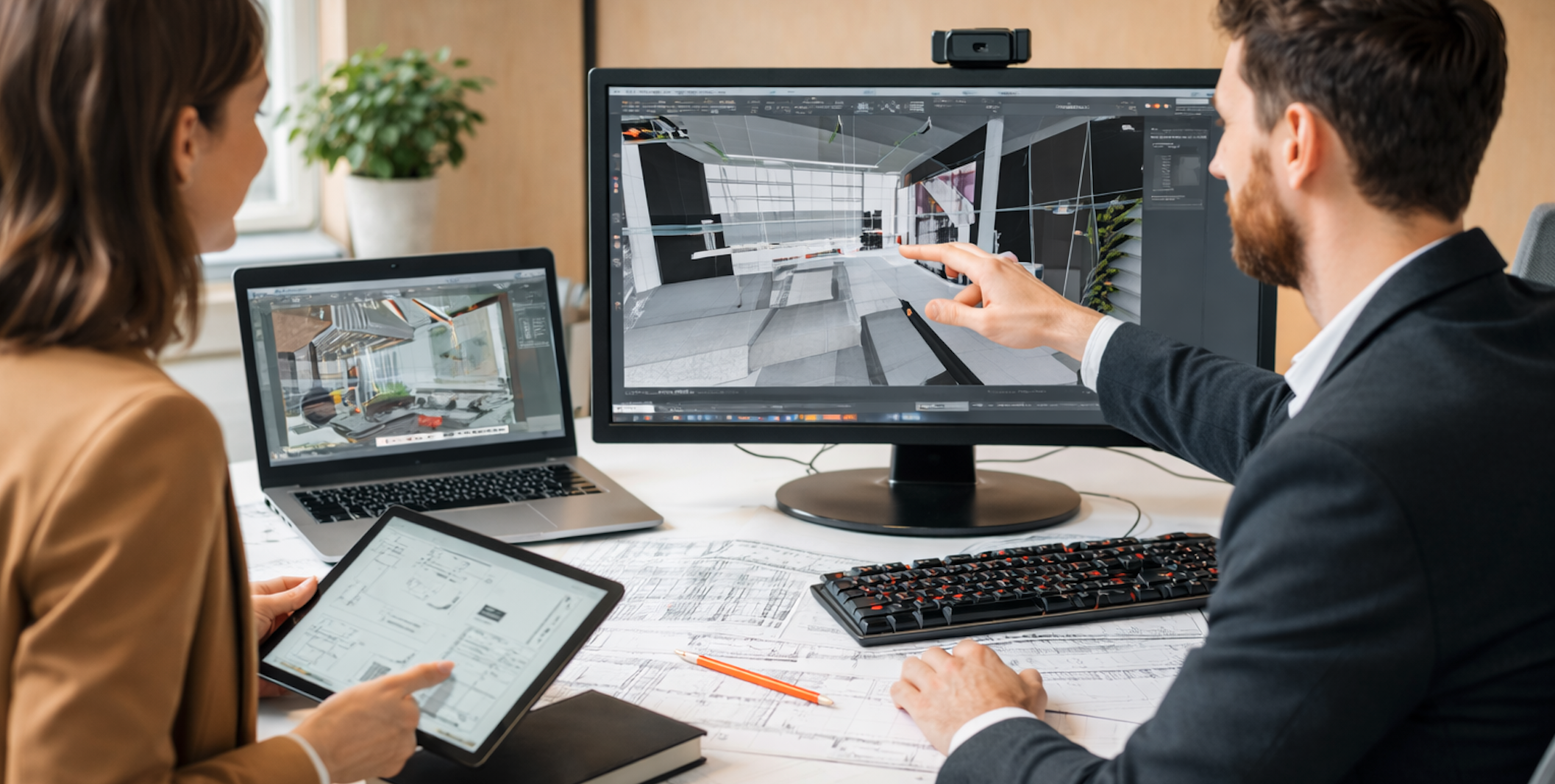
At Archipelago, we stay close to how small AEC firms are adapting their workflows as AI accelerates the industry. One thing is becoming clear heading into 2026: the real competitive edge will be speed.
Not just design speed, but speed to decide, validate, approve, sell, and move forward.
Here are the five trends we believe will have the most direct impact on small AEC firms.
1. AI Permitting & Code Intelligence
Permitting has always been one of the biggest sources of uncertainty in AEC. That uncertainty is now shrinking.
AI is starting to translate zoning codes and building regulations into project-specific insights early in the process. Instead of discovering constraints late, teams can test feasibility upfront, reduce risk, and make better go / no-go decisions. Tools like Symbium already make zoning rules more readable, while newer platforms such as CivCheck.ai are being used not only by designers, but also by municipalities themselves to pre-check compliance.
This shift is reinforced by what’s happening on the public side. Cities like New York City, Los Angeles, Vancouver, and Singapore are already adopting AI or running active pilots to automate pre-validation, completeness checks, and early code review. AI doesn’t replace reviewers — it filters noise before humans step in.
For small firms, this means fewer resubmissions, more predictable timelines, and safer proposals.
2. Vibe Coding & AI Coding: Firms Building Their Own Tools
One of the quietest but most disruptive shifts in AEC is that firms are no longer waiting for software vendors.
AI coding platforms now allow architects, engineers, and builders to create internal tools using natural language. Instead of adapting workflows to generic software, teams are shaping software around their own processes. Platforms like VibeCode and Lovable make it possible to generate functional apps from prompts, while environments such as Replit give more technical teams room to go deeper.
In practice, this shows up as custom reporting tools, internal CRMs, QA checkers, documentation hubs, or client portals, all built fast, cheap, and exactly to spec. For small firms, this removes a massive bottleneck: waiting.
3. Pre-Design Will Get Faster Than Ever
Most designers already use AI, but usually at the end of the workflow, for visuals and presentations. In 2026, the biggest gains will happen much earlier.
AI is increasingly used as a thinking partner in pre-design, helping teams externalize ideas quickly. Visual tools like Midjourney allow rapid concept exploration, while platforms such as Nano Banana Pro compress what used to be multiple steps — sketching, rendering, and presentation — into a single flow. On the feasibility side, tools like TestFit help teams test massing and density in minutes.
The result is simple: ideas move from vague thoughts to tangible options faster, conversations start earlier, and more projects actually get off the ground.
4. Data Management Becomes the Real Bottleneck
By 2026, most AEC firms won’t be lacking tools — they’ll be overwhelmed by disconnected information.
Emails, WhatsApp messages, meeting notes, drawings, RFIs, approvals, and decisions live across too many platforms. The firms that move faster are the ones that intentionally design how information flows. Many are consolidating knowledge in tools like Notion, turning static documents into searchable, AI-assisted systems, while others rely on ecosystems such as Google Workspace to summarize, surface, and connect information across daily work.
Speed here doesn’t come from more software, but from clarity. When teams can find the right information instantly, everything else accelerates.
5. AI for Sales, Portfolios & Better Decisions
AI isn’t just changing how projects are delivered, it’s changing which projects firms choose to pursue.
Sales and proposal workflows are becoming faster and more structured, with tools like Proposify helping teams standardize scope, pricing logic, and approvals. On the presentation side, platforms such as Gamma allow teams to generate clearer, more persuasive narratives without starting from scratch.
Two related trends are reinforcing this shift: AI sales coaching tools that analyze calls and proposals to improve how teams sell, and AI-driven portfolio rendering that upgrades weak or outdated portfolios to better communicate value.
Final Takeaway
Firms that move ideas, decisions, approvals, and sales conversations faster will outperform, regardless of size. In 2026, small firms that design their own workflows will feel bigger than they are.
That’s the real shift.
.png)
%20(4).png)
.png)